


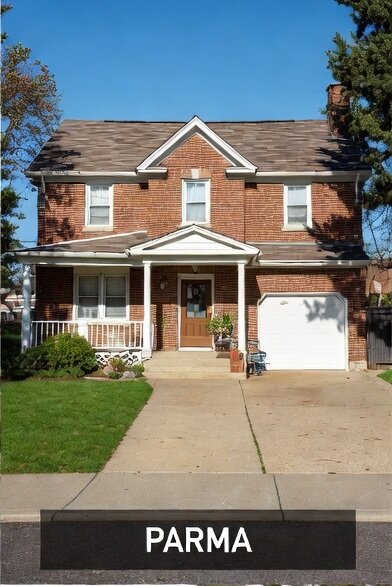
Listen, if you’re tangled up in the aftermath of a family member’s passing—say, that sturdy brick two-story in Parma that’s been in the family since the steel mills were humming—you’re probably asking the big one: When does the cash from selling it show up in my bank account? Not the executor’s, not the court’s, but yours, as an heir staring down months of probate paperwork. I’ve walked this road with more Cleveland families than I can count, from the lakefront condos in Edgewater to fixer-uppers in Old Brooklyn, and let me tell you, it’s equal parts frustrating and fascinating. The system in Cuyahoga County is built like the bridges over the Cuyahoga River—sturdy, methodical, and occasionally creaky—but it does work to get money to the right people.
This isn’t some dry legal textbook; it’s the real-deal guide for folks googling “probate proceeds disbursement Cuyahoga County” or “how heirs get paid from estate sale Cleveland Ohio.” We’ll dive deep into the flow of funds after that closing, who hunts down the creditors (hint: it’s not optional), the six-month clock ticking on claims, when the personal representative (that’s the executor or administrator, or PR for short) tells the court the debts are done, and yeah, those fees that quietly chip away at the pot. Tailored right to our corner of Ohio, where the Probate Court on Lakeside Avenue handles thousands of cases a year, this 2,000-word breakdown will arm you with the know-how to navigate it without losing your cool. Let’s get into it—because waiting on inheritance shouldn’t feel like waiting for the Browns to win a playoff game.
The Probate Primer: Why Cuyahoga County’s Process Feels Like a Cleveland Winter—Long and Layered
First off, a quick reality check: In Ohio, and especially Cuyahoga County, probate isn’t optional for most real estate. If the house was in your loved one’s name alone—no joint ownership, no transfer-on-death deed—it heads straight to probate. We’re talking estates valued over $35,000, which covers damn near every standalone home from Lakewood to Strongsville. The Cuyahoga County Probate Court kicks things off when the PR files the application: death certificate, will (or affidavit of no will), heir list, the works. Court fees start at around $200 for filing, but that’s just the appetizer.
From there, it’s inventory time. The PR appraises the property—think $400-600 for a local realtor’s opinion in this market, where medians flirt with $220,000—and lists all assets and debts. Selling the house? That’s a whole “land sale proceeding” under Ohio Revised Code Chapter 2127. You file a motion (another $20 fee), prove it’s necessary (debts mounting? Roof caving?), and get judicial nod. Private sales beat auctions for price, but either way, the buyer’s cash lands in the estate account at closing, not your pocket.
Why the hold-up? Protection. Ohio’s setup ensures debts get paid before heirs feast, dodging lawsuits down the line. In Cuyahoga, with our high volume of filings—over 5,000 annually—judges are sticklers for procedure. I’ve seen a simple sale drag to 18 months if cousins squabble, but most wrap in 9-12. And disbursement? It’s the grand finale, after creditors quiet down and the PR certifies the slate’s clean. No shortcuts, but plenty of strategy to speed it along.
Local flavor: Cleveland’s aging population means more probate real estate sales here than anywhere in Ohio. If you’re in Maple Heights dealing with a foreclosed-on relative’s place, know the court’s self-help resources are gold—free forms online, even webinars. But skip ’em at your peril; one missed step, and you’re refiling everything.
Hunting Creditors: Whose Job Is It, and What’s That Six-Month Timer All About?
Ah, creditors—the ghosts at the estate feast. Nobody wants to think about old credit card bills or that lingering hospital tab when you’re selling Grandma’s bungalow in Cleveland Heights, but Ohio law demands you do. So, whose job is it to round ’em up? Square on the PR’s shoulders. As fiduciary, you’re legally bound to notify known creditors by mail and publish a general notice in a newspaper of general circulation—like the Cleveland Plain Dealer or a local weekly—for three straight issues within 60 days of appointment. That’s ORC 2117.03 in action: Diligence without detective work. You dig through mail, bank statements, tax returns—whatever’s handy—to ID the obvious ones. Unknowns? The ad covers ’em.
Now, the timeline: Ohio gives creditors six months from the date of death to file claims, full stop. Not from probate opening, not from sale closing—death day starts the clock, per ORC 2117.06. Miss it? Claim’s barred, unless it’s a sneaky one like taxes or mortgages that sneak under the wire. This window lets the estate breathe: PR pays valid claims in priority order (funeral costs first, then admin fees, secured debts like the house loan, unsecured last).
In Cuyahoga practice, I advise PRs to track this religiously—calendar alerts, even. One client in Bay Village overlooked publishing; a late vendor claim popped up at month seven, forcing a mini-hearing and $2,000 in extra legal. Pro tip: Use the court’s “Notice to Creditors” form; it’s plug-and-play. And if the estate’s small? Skip full probate via “release from administration” after debts clear, but real estate usually nixes that shortcut.
This creditor chase isn’t punitive—it’s fair play. Ensures heirs aren’t hit with collection calls post-payout. In our county, where economic echoes from the recession linger (think underwater mortgages), it’s crucial. PRs, document everything; courts love receipts.
From Closing Table to Court Ledger: The Step-by-Step Disbursement Dance

Okay, the house sells—hallelujah. That $280,000 cash offer from a local investor closes smooth, liens paid off at title company. But where’s the money? Straight into the estate’s interest-bearing account, managed by the PR at a Cuyahoga bank. No direct heir handouts; proceeds mingle with other assets, per ORC 2113. No skipping the line.
Post-closing, file the sale confirmation with the court—deed recorded, net proceeds tallied. Then, the real work: Paying debts. PR reviews claims during that six-month window, allowing or rejecting them (written notice for rejections, giving 30 days to sue). Valid ones? Queue ’em by priority: Admin expenses (your fees, lawyer bills), funeral/burial (up to $4,000), taxes, then the rest. House sale covers the mortgage first, obviously—common in Cleveland, where 20% of probates involve liens.
Once the creditor dust settles? Enter the final account. This is when the PR notifies the Probate Court that all valid debts are paid: Within 30 days of wrapping administration, file Form 13.3 or equivalent, detailing every receipt (sale proceeds), disbursement (debts, fees), and balance for heirs. It’s your “debts cleared” manifesto—attach proofs like canceled checks, tax clearances. Cuyahoga requires a hearing if over $35,000 or contested; otherwise, waive it for speed. Judge approves? Green light for distribution.
Disbursement itself: PR cuts checks or wires to heirs per the will (or Ohio intestate laws if no will—spouse/kids first). Sign releases absolving the estate. For a $200,000 net sale after $40,000 debts/fees, three heirs might see $53,000 each. Partial advances? Possible if estate’s flush and court oks, but rare early on—risk of clawback if new claims surface.
In my experience, Cuyahoga families see funds 3-6 months post-final account. One executor in South Euclid waited an extra quarter for IRS clearance on a big estate. Tip: Bundle the final account with distribution motion to shave weeks.
Heirs or the State? Who Ultimately Pockets the Probate Proceeds in Ohio
Short answer: You, the heirs—99 times out of 100. Ohio’s no “death tax” grabber; since repealing inheritance tax in 2013, the state steps back unless everyone’s vanished. Escheat (ORC 2105.15) only triggers after diligent search: Publish notice, wait three years, then unclaimed funds head to the county treasurer’s pool, accruing interest for potential claimants. In Cuyahoga, that’s searchable online—I’ve helped a Parma family reclaim $15,000 from a forgotten aunt’s estate that way.
No heirs? No will? Intestate succession kicks in: Surviving spouse gets it all if no kids; otherwise, split with descendants. State as last resort, but it’s rare—less than 1% of cases. Proceeds from your Cleveland probate sale? Yours, after the process weeds out wolves.
The Fee Gauntlet: State, County, and Other Bites from Your Cuyahoga Estate Payout
Fees—ugh, the silent thief. Cuyahoga doesn’t levy extra “probate taxes,” but the tab adds up. Court basics: $200 filing, $20 for land sale motion, $25 for personal property sales if any, $15 per rejected claim. Accounts? $50 base, plus per-page after 20.
PR compensation: Statutory schedule—4% on first $100k of estate value, 3% on next $300k, down to 1% over $500k, including real estate proceeds (sold or appraised). For a $250k house sale, that’s ~$7,500. Attorneys? “Reasonable,” but Cuyahoga’s worksheet pegs 4-7% total, often $5,000-15,000 for full probate.
Sale extras: Transfer tax ($1/$1,000 value, so $250 on $250k), recording $34, title work $200-400. No state inheritance fee, but federal estate tax over $13.61M (2024 threshold). Property taxes? Prorated from proceeds—delinquents accrue 10% interest.
Total hit? 5-10% on a mid-size estate. Shop local: Cleveland Bar referrals keep it reasonable. One tip from a Shaker Heights case: Bundle services to cap at 6%.
Timelines, Traps, and Triumphs: Making Cuyahoga Probate Work for You
Full timeline: 1-3 months to open probate, 3-9 for inventory/sale, 6 for creditors, 1-3 for final account/distribution. Total: 9-18 months, faster with cash buyers.
Traps? Contested claims—file exceptions quick. Or tax liens; get Ohio Dept. of Taxation clearance early.
Triumphs: Hire a PR if overwhelmed (banks charge 1-2%). Use tech—apps for tracking claims. And remember, this honors your loved one: Fair, final, family-focused.
Final Thoughts: From Probate Pain to Heir Gain in Cleveland
Navigating probate proceeds in Cuyahoga County? It’s a slog, but heirs win the day—debts paid, fees filed, funds flowing after that six-month creditor hush and PR’s final nod. State? Only for the ghosts. If you’re in the thick of it, hit up the Probate Court clinic or a local attorney. Got tales from your own tangle? Share below—let’s swap war stories over virtual coffee.