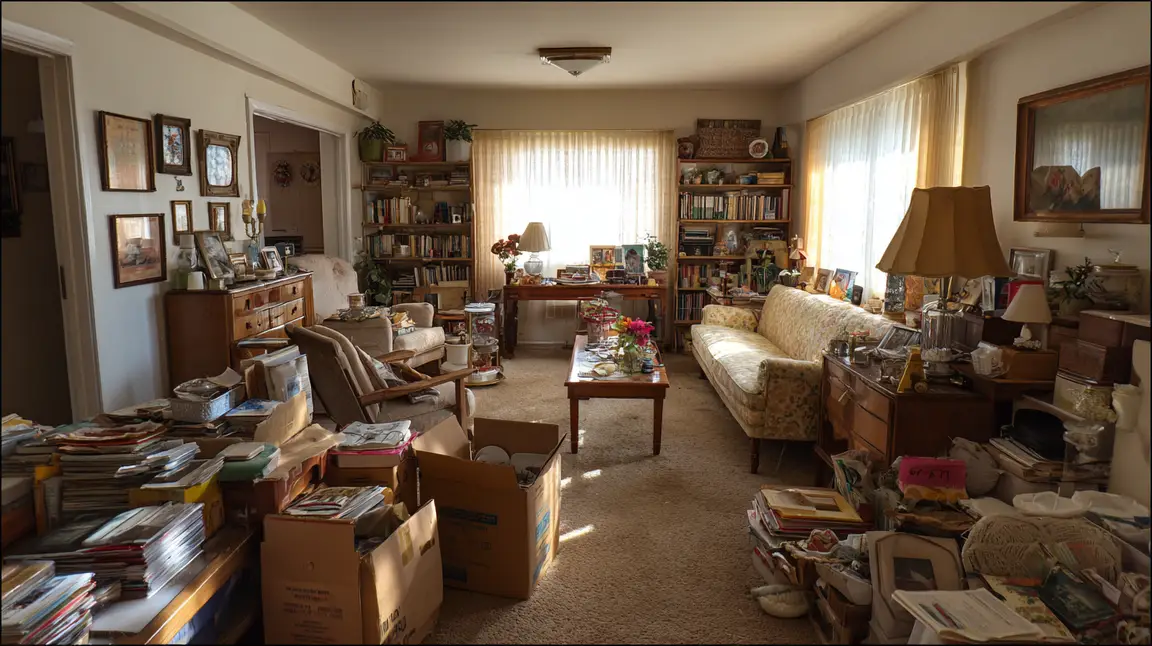

When someone inherits a house, the real estate may be only part of what they inherit.
Open the front door and there may be an entire lifetime inside.
Furniture. Family photographs. Clothing. Tools. Dishes. Important paperwork. Jewelry. Collectibles. Holiday decorations. Boxes in the basement. Decades of belongings in the garage.
For an executor or family member, figuring out what to do with everything can quickly become one of the hardest parts of settling an estate.
And there’s an important rule to remember:
Don’t start throwing everything away just because you’re trying to get the house emptied.
Some belongings may be estate assets. Some may have significant financial or sentimental value. Others may have been specifically left to someone in the will.
At Legacy Home Solutions, we work with inherited and probate properties throughout Northeast Ohio, including houses where significant amounts of personal property remain inside.
Here’s a practical way to work through an inherited house without turning the process into chaos.
Quick Answer: What Should You Do With Everything in an Inherited House?
Start by securing the house and identifying important documents, valuables and property that may belong to the estate or specific beneficiaries.
Don’t immediately throw away, donate or sell everything.
Once you’re authorized to handle the property and understand the estate’s requirements, belongings can generally be sorted into categories such as:
- Important documents
- Family keepsakes
- Property specifically left to someone
- Valuable items
- Items family members want
- Items worth selling
- Donations
- Trash or recycling
- Items that may remain with the house under an as-is sale agreement
If probate is involved, speak with the estate’s attorney before disposing of potentially valuable estate property.
The goal isn’t to empty the house as quickly as possible. It’s to protect important property first and then determine the simplest and most financially sensible way to handle what’s left.
1. Don’t Start With a Dumpster
When a family walks into a house packed with decades of belongings, ordering a dumpster can feel like the obvious first move.
It usually shouldn’t be.
Before disposing of anything, determine who has authority to handle the deceased person’s property.
If an Ohio probate estate is being administered, the executor or administrator has responsibilities involving estate assets.
Under Ohio Revised Code §2115.02, executors and administrators generally must file an inventory of the deceased person’s Ohio real estate interests and personal property subject to estate administration. The inventory is generally due within three months of appointment unless the probate court grants an extension.
That doesn’t mean every coffee mug needs its own professional appraisal. But it does mean you shouldn’t assume everything inside the house is yours to discard simply because you’re a family member.
Before a major cleanout begins, understand what belongs to the estate and what needs to be documented.
2. Secure the House Before Sorting Anything
Before inviting relatives, estate-sale companies, cleaners or contractors into the property, make sure the house is secure.
Check doors, windows, garage doors, spare keys, alarm systems, vehicles, sheds and other storage areas.
If many people have keys or access to the house, the executor or person legally responsible for the property may want to discuss appropriate security measures with the estate attorney.
This becomes especially important when nobody is living there.
You don’t want valuable belongings disappearing while everyone assumes somebody else took them.
3. Find Important Documents First
Before concentrating on furniture and household goods, look for paperwork.
Important documents can easily disappear during a rushed cleanout.

Look for:
- The original will and estate-planning documents
- Trust documents
- Deeds and property records
- Mortgage statements
- Bank and investment statements
- Insurance policies
- Vehicle titles
- Tax records
- Business records
- Loan documents
- Social Security and pension information
- Military records
- Birth and marriage certificates
- Bills and creditor information
- Password or account information
Don’t assume a box of old paperwork is worthless until it has been properly reviewed.
Something that looks unimportant could contain information needed to settle the estate, identify an asset or resolve a title problem.
4. Separate Valuables and Sentimental Items
Next, identify belongings that deserve individual attention.
That might include jewelry, coins, artwork, antiques, collectibles, valuable tools, electronics, vehicles, family photographs, letters, heirlooms, military memorabilia, rare books and valuable furniture.
Remember that financial value isn’t the only consideration.
A box of family photographs may be worth almost nothing at an estate sale but still be irreplaceable to the family.
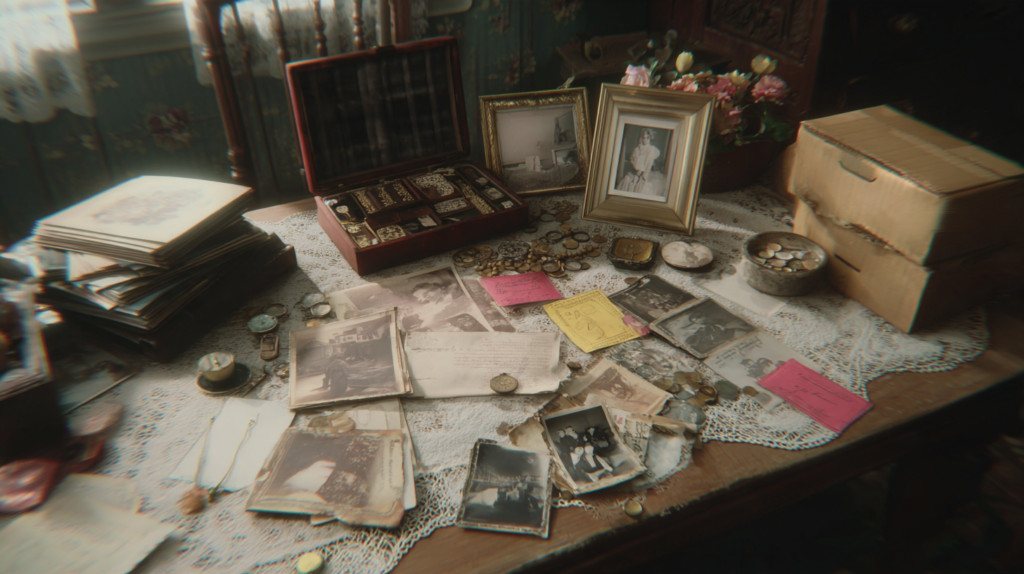
Before the general cleanout begins, create separate areas for:
Important documents
Potentially valuable property
Sentimental or family property
This helps prevent important belongings from accidentally ending up in a donation pile or dumpster.
5. Check the Will Before Selling or Giving Away Specific Items
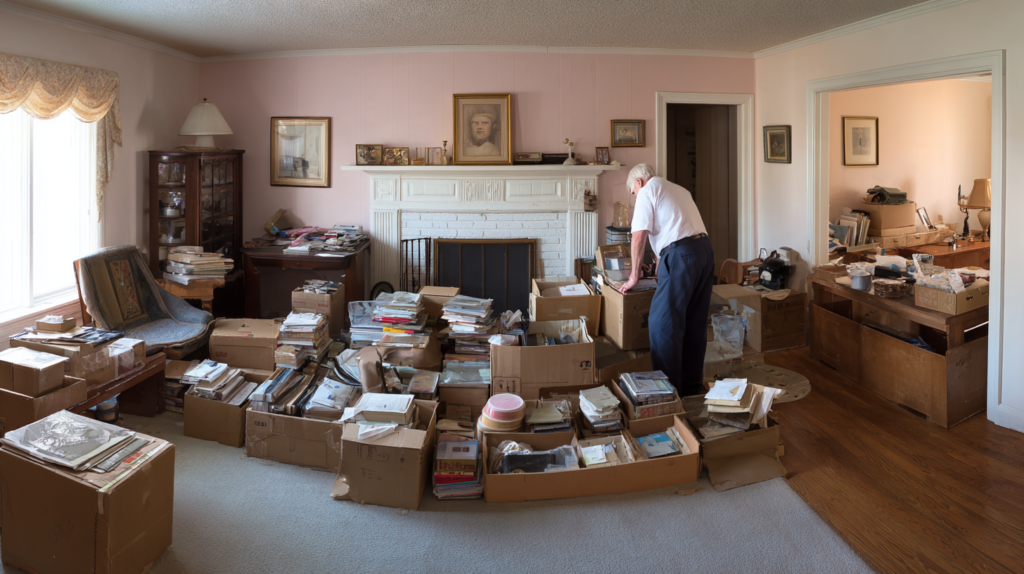
A will may specifically leave an item to a particular person.
Ohio law treats specifically bequeathed property differently in certain circumstances and provides procedures concerning the delivery and sale of that property during estate administration.
So before selling Grandma’s jewelry, Dad’s antique clock or a valuable collection, determine whether the will says who is supposed to receive it.
Don’t create an unnecessary family dispute—or probate problem—by selling something intended for somebody else.
If you’re unsure whether an item can be sold, donated or distributed, ask the estate’s probate attorney before disposing of it.
6. Sort What’s Left: Keep, Sell, Donate or Dispose
Once important estate property has been addressed, the physical cleanout becomes much easier if everything goes into defined categories.
A simple system might be:
KEEP — Items being retained by the estate or family.
FAMILY — Items beneficiaries or relatives may want.
SELL — Property valuable enough to justify selling.
DONATE — Usable property that isn’t worth the time or expense of selling.
TRASH / RECYCLE — Items with little usable or financial value.
HOUSE — Unwanted items that may be allowed to remain if the eventual buyer agrees.
Using labeled rooms, tables, boxes or colored stickers can keep family members from reconsidering the same items repeatedly.
Don’t Try to Sell Everything
Not everything with resale value is worth selling individually.
A $25 item might require someone to research it, photograph it, create a listing, answer messages, package it and ship it.
Multiply that by 100 household items and settling an estate can become a part-time job.
Focus individual selling efforts on belongings with enough value to justify the work, such as jewelry, collectibles, quality furniture, tools, vehicles, coins, antiques or specialty equipment.
For everything else, ask:
Is the amount we’re likely to receive worth the time required to sell it?
7. Should You Hold an Estate Sale?
For a house containing a substantial amount of marketable personal property, an estate sale may be worth considering.
An estate-sale company can potentially help organize, price, advertise and sell belongings.
Before hiring one, understand its commission, additional fees, minimum requirements, what happens to unsold property and who is responsible for the final cleanup.
If the belongings are part of a probate estate, make sure the executor has the appropriate authority before proceeding.
Estate sales can be extremely useful in the right situation. But a house containing mostly ordinary, low-value household goods may not generate enough money to justify a large professionally managed sale.
8. Understand Ohio’s Rules Before Selling Estate Personal Property
This is another reason not to rush the cleanout.
Ohio has specific rules governing estate personal property.
If a will gives a qualified executor or other covered fiduciary authority to sell a class of personal property, Ohio law can permit the sale without a separate probate-court order unless that authority is expressly limited.
In other circumstances, Ohio law provides a process through which a probate court may authorize an executor or administrator to sell estate personal property.
There are also rules involving specifically bequeathed property and other estate assets.
In other words:
“We’re the family, so we’re having a garage sale” isn’t a substitute for understanding who owns and controls estate property.
If probate is open, ask the estate attorney what can be sold, distributed, donated or discarded before disposing of valuable items.
9. Donate or Dispose of What Remains
Once important documents, valuables, family belongings and sale items have been handled, donation can be an efficient way to reduce what’s left.
Clothing, furniture, kitchenware, books, household goods, tools and other usable items may be suitable for donation.
Check with the organization first because not every charity accepts every type of item.
After donations, you’ll have a much clearer picture of what’s actually trash.
At that point, options may include a dumpster, junk-removal company, municipal trash service, recycling or specialty disposal.
Be careful with chemicals, fuels, paints, batteries and other materials that may require special disposal.
The order matters:
The right order: Identify → Protect → Distribute or Sell → Donate → Dispose.
The wrong order: Dumpster first, questions later.
10. What If the Inherited House Is Extremely Full?
Some inherited properties go well beyond an ordinary cleanout.
Basements may be packed wall-to-wall, garages may have no room for a vehicle, or decades of belongings may leave only narrow paths through rooms.
Start with safety. Be cautious around unstable stacks, broken glass, pests, mold, water damage and other hazards.
Then prioritize:
- Important documents
- Valuables
- Sentimental belongings
- Property intended for beneficiaries
After those items are protected, decide whether clearing everything else yourself actually makes financial sense.
Depending on how you plan to sell the house, a complete professional cleanout may not even be necessary.
11. What If You Live Outside Ohio?
Distance can make every part of an estate cleanout more difficult.
Travel, hotels, time off work, shipping belongings and coordinating contractors can add significant expense and inconvenience.
Legacy Home Solutions has worked with families facing exactly this situation.
One customer living out of state. was dealing with her late mother’s Northeast Ohio house. Her mother had kept a large amount of belongings, and trying to clean out the property from several states away had become more than she wanted to manage.
Legacy purchased the house with its remaining contents.
That’s one example of why an out-of-state heir should decide how the house will be sold before paying to completely empty it.
Related guide:How to Sell an Inherited Ohio House When You Live Out of State
12. Can You Sell an Inherited Ohio House With Belongings Still Inside?
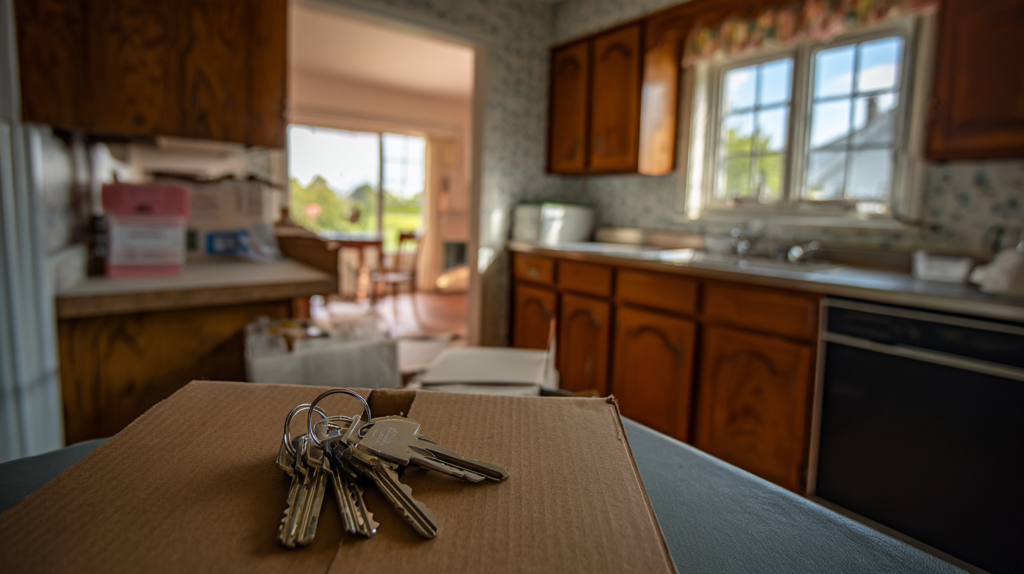
Potentially, yes.
A house doesn’t always have to be completely empty before it can be sold.
The important distinction is between property the estate or beneficiaries need to retain and unwanted property everyone has agreed can remain.
Legacy Home Solutions buys inherited and probate houses in as-is condition throughout Northeast Ohio and can discuss a purchase in which agreed-upon unwanted contents remain inside.
That doesn’t mean important estate property should simply be abandoned.
Documents, valuables, specifically bequeathed items and property that needs to be administered should be handled appropriately first.
But once those issues are addressed, you may not have to pay thousands of dollars to remove every old couch, shelf, box or piece of unwanted furniture simply to sell the property.
Know How You’re Selling Before Paying for a Full Cleanout
Imagine spending thousands of dollars on junk removal, cleaning, moving belongings and repairs before you’ve even decided how you’re selling the house.
Those expenses might make sense if they produce a significantly better financial outcome.
But don’t automatically spend the money.
If you’re preparing a good-condition property for a traditional retail listing, cleaning and selective improvements may be worthwhile.
If the property needs substantial repairs and you’re considering an as-is sale, some of those expenses may accomplish very little.
Compare your options and calculate what the estate is likely to net, not merely what the house might sell for.
Inherited-House Belongings Checklist
Before emptying an inherited house in Ohio:
- Determine who has legal authority over the estate property.
- Secure the house and control access.
- Locate the will and important estate documents.
- Find financial, insurance, property and tax records.
- Identify valuables and sentimental belongings.
- Check the will for specifically bequeathed property.
- Determine what needs to be inventoried or valued.
- Separate items worth selling or donating.
- Dispose of true trash last.
- Decide how the house will be sold before paying for a complete cleanout.
That final step can save a family considerable unnecessary work and expense.
Selling an Inherited House Full of Belongings in Northeast Ohio?
If you’ve inherited a house in Cleveland, Cuyahoga County, Medina County, Summit County or the surrounding Northeast Ohio area, you don’t necessarily have to empty every room before finding out what the property is worth.
Legacy Home Solutions is a local father-and-son business operated by Kelly and Brandon McEntire. We’ve been involved in Northeast Ohio real estate since 2008 and work with inherited, probate and repair-heavy properties.
Kelly and Brandon can look at the property as it currently sits and discuss what needs to be removed and what agreed-upon unwanted contents may be able to remain with the house.
That gives you another option to compare before spending thousands of dollars cleaning, repairing and emptying the property.
No obligation. No pressure to accept an offer.
Call Legacy Home Solutions at (440) 973-6024 to discuss the house and your situation.
Frequently Asked Questions About Belongings in an Inherited Ohio House
Can I throw away belongings from an inherited house?
Don’t automatically dispose of belongings simply because they’re inside an inherited property. If the contents are part of an estate, an executor or administrator may have responsibilities involving inventory, administration and distribution. Valuable property and items specifically left to beneficiaries require particular care.
Does personal property have to be included in an Ohio probate inventory?
Ohio Revised Code §2115.02 generally requires an executor or administrator to inventory tangible and intangible personal property of the decedent that is to be administered and has come to the fiduciary’s possession or knowledge, along with the decedent’s Ohio real-property interests. Specific circumstances can vary, so follow the probate court’s requirements and your attorney’s advice.
Does every item need a professional appraisal?
No. Ohio Revised Code §2115.02 provides that an asset whose value is readily ascertainable does not have to be appraised, although it still must be included in the inventory when otherwise required.
What if the will leaves a particular item to someone?
Don’t sell or discard it without understanding the estate requirements. Ohio law provides rules concerning specifically bequeathed property, including circumstances involving delivery to the beneficiary and limitations on selling such property.
Is an estate sale worth it?
It depends on the quantity and value of the belongings. A house containing valuable furniture, collectibles, tools and other marketable items may justify a professional estate sale. A property containing mostly ordinary low-value household goods may not.
Can I sell an inherited house without cleaning everything out?
Depending on the buyer and the agreement, potentially yes. Legacy Home Solutions can consider purchasing inherited houses with agreed-upon unwanted contents remaining. Important estate property should be handled appropriately before closing.
What if I live out of state and can’t clean out the house?
Consider trusted local family members or professionals for important belongings and compare estate-sale, cleanout and as-is-sale options. Decide how you intend to sell the property before paying for a complete cleanout.
Ohio Probate Resources
For additional information about estate personal property, useful starting points include:
- Ohio Revised Code §2115.02 — Estate Inventory
- Ohio Revised Code §2113.39 — Sale Under Authority of Will
- Ohio Revised Code §2113.40 — Sale of Personal Property
- Ohio Revised Code §2113.51 — Property Delivered to Legatee
- Ohio Revised Code §2113.53 — Distribution of Estate Assets
- The probate court handling the estate
Every estate is different. The executor, administrator or family should consult the appropriate Ohio probate attorney when there is uncertainty about ownership, valuation, sale, distribution or disposal of estate property.
This article provides general educational information about inherited houses, estate belongings and Ohio probate. It is not legal, tax, appraisal or financial advice. Legacy Home Solutions is not a law firm or estate-sale company. Consult qualified professionals regarding your specific estate.